
Miniature Ball Screw

Home›Products›Miniature Ball Screw

Compare PFU flange-nut and PCG threaded-nut ball screws for compact linear-motion assemblies. Start with mounting space, diameter and lead, then check the model dimensions and operating requirements before selecting a configuration.
Product category

Miniature Ball Screw

Selection resources

Choosing a miniature ball screw

A ball screw converts rotary motion into linear travel. Lead describes that travel per screw revolution; it is not a substitute for checking load, accuracy or the installation arrangement. The examples below are selected models already published on this website. Use the linked product tables and catalog to review the complete dimensions.

Scroll the table sideways to see all model examples.

Representative published models — nominal diameter / lead in mm
Product seriesMounting and selectionPublished model examples
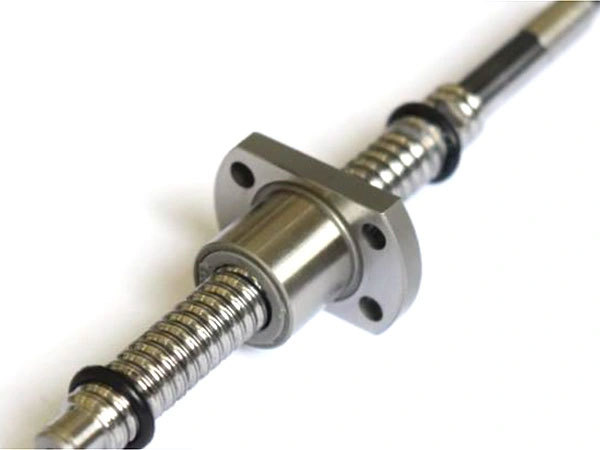
PFU Stock Rolled Ball Screw PFU uses an FU flange nut. Compare nut diameter, flange diameter and thickness, nut length and the available mounting space before choosing a model. PFU0401: Ø4 mm / 1 mm lead; PFU0805: Ø8 mm / 5 mm lead; PFU1204: Ø12 mm / 4 mm lead.
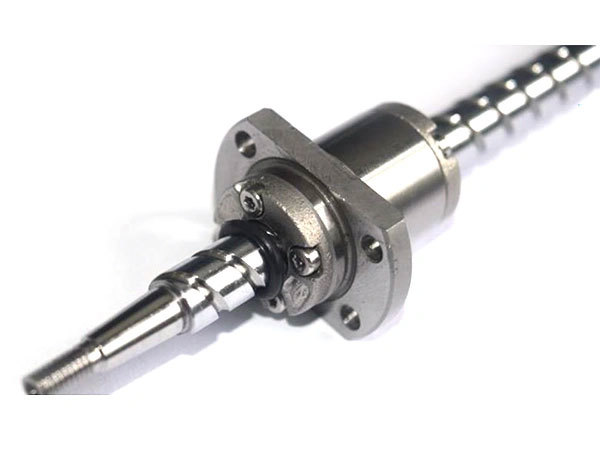
PCG Thread Nut Ball Screw PCG uses a threaded cylindrical nut. Check the external nut thread, nut diameter, length and shoulder dimensions against the mating component and mounting arrangement. PCG0401: Ø4 mm / 1 mm lead; PCG0804: Ø8 mm / 4 mm lead; PCG1205: Ø12 mm / 5 mm lead.

Examples are not a complete size range. Open each product for its model matrix and drawings; confirm dimensions and operating requirements before ordering.

Check load and installation together

Compare the required axial load with the model's dynamic and static load-rating fields. Review the nut envelope and shaft-end drawing together with the support arrangement. Model selection should account for working stroke, speed and the assembly's accuracy requirements; a diameter-and-lead match alone is insufficient.

Specify accuracy and operating conditions

Specify your required positioning accuracy and repeatability, along with any preload or clearance requirements. Include the installation orientation, lubrication plan and operating environment. If replacing an existing assembly, identify the model and provide a drawing rather than assuming matching dimensions make two assemblies interchangeable.

View the Ball Screw Catalog

Prepare your product inquiry

Include these details so the model and installation requirements can be reviewed together.

  • Required model or drawing, nominal diameter, lead and mounting dimensions.
  • Working stroke, axial load, travel speed and operating cycle.
  • Accuracy, repeatability, preload or clearance, and shaft-support arrangement.
  • Lubrication, operating environment, shaft-end details and required quantity.
Discuss your selection