
How to calculate the critical speed of the ball screw
July 12, 2023 · 3 min read
The critical speed of a ball screw refers to the speed at which it will experience spiral vibration or resonance under a certain load when its speed exceeds the critical speed, resulting in a decrease in its accuracy and life or even damage. Therefore, the critical speed is an important performance indicator and is the maximum speed that a ball screw can withstand.
The critical speed of a ball screw is related to its structure, material, diameter, load, support mode, etc. Generally, the higher the critical speed of a ball screw, the wider its range of use. In practical applications, to avoid spiral vibration or resonance of the ball screw, suitable specifications and models should be selected according to its load and speed, and ensure that it operates within the rated load and speed range.
The critical speed of a ball screw can be calculated using the following formula:
Vc = (K x D^2) / (d x L)
where Vc is the critical speed of the ball screw, measured in m/s; K is the critical speed constant of the ball screw, which is usually between 1.05-1.5; D represents the diameter of the ball screw, measured in mm; d represents the lead of the ball screw, measured in mm; L represents the effective length of the ball screw, measured in mm.
It should be noted that the above formula is only applicable to ball screws with double-end support. If the support mode of the ball screw is different, the calculation formula will also change. In addition, the critical speed constant K in the formula will also be affected by the structure, material, and motion state of the ball screw. Therefore, it should be adjusted according to the specific situation of the ball screw in practical calculations.
Related products
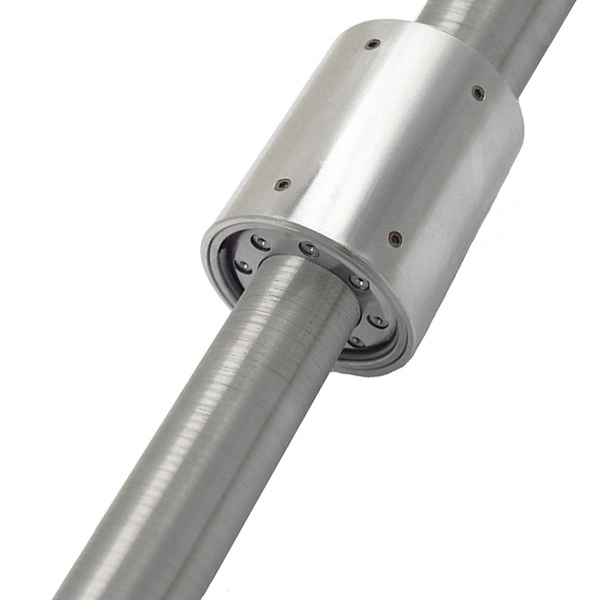
STR SERIES
STR SERIES is part of the Series Motion planetary roller screw portfolio.
View product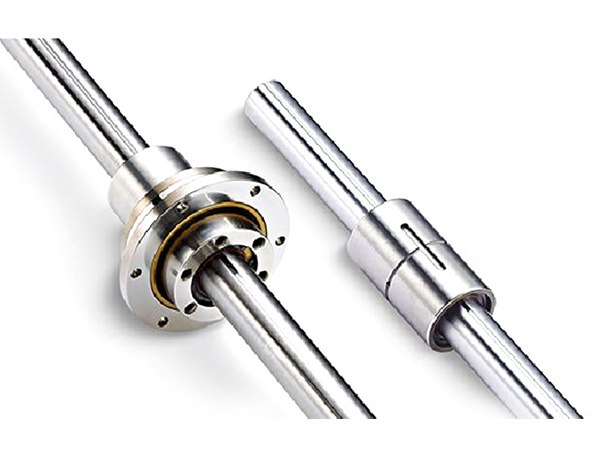
SL SERIES
Ball Spline is a precision mechanical transmission element suitable for applications requiring high precision, high rigidity, high speed and large loads, especially for round-trip and rotary movements.
View productSO SERIES
Ball Spline is a precision mechanical transmission element suitable for applications requiring high precision, high rigidity, high speed and large loads, especially for round-trip and rotary movements.
View product